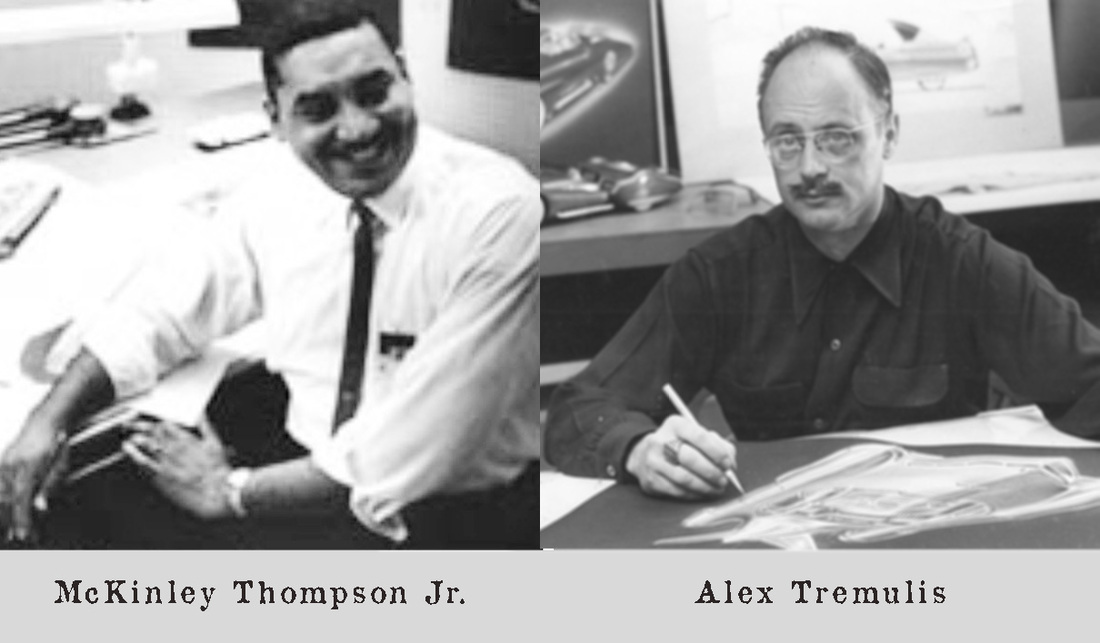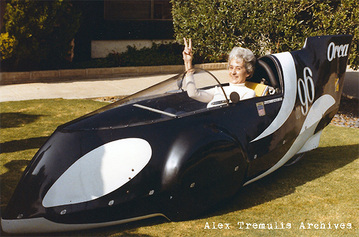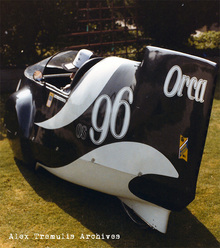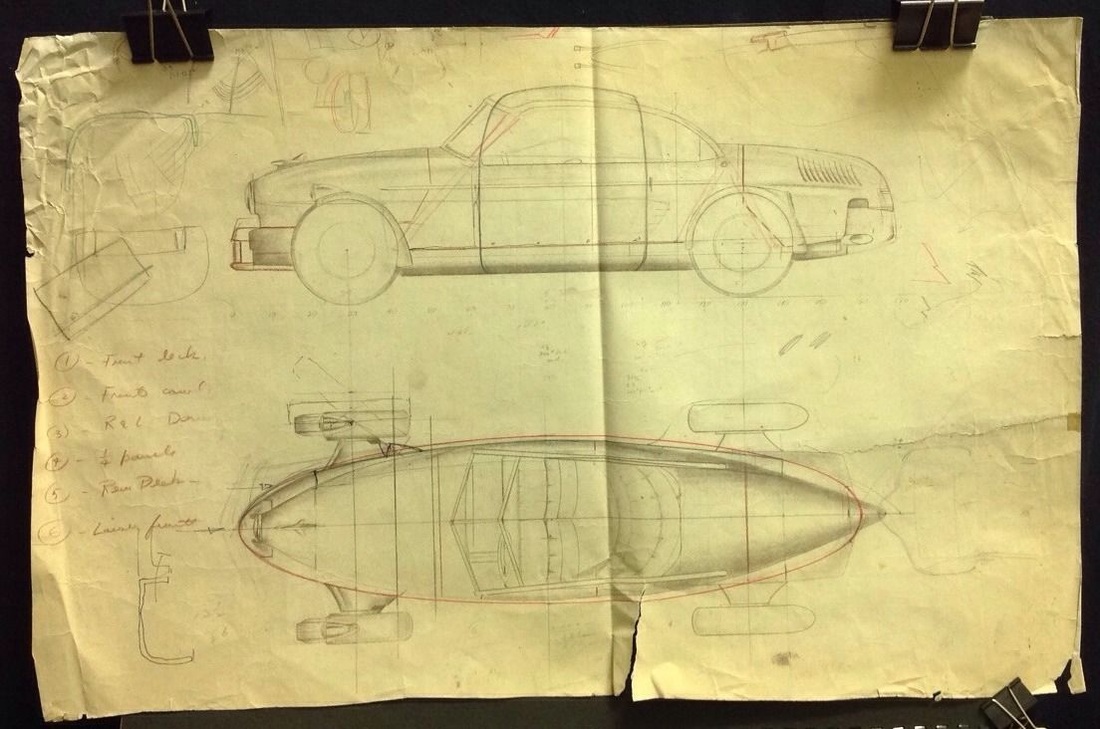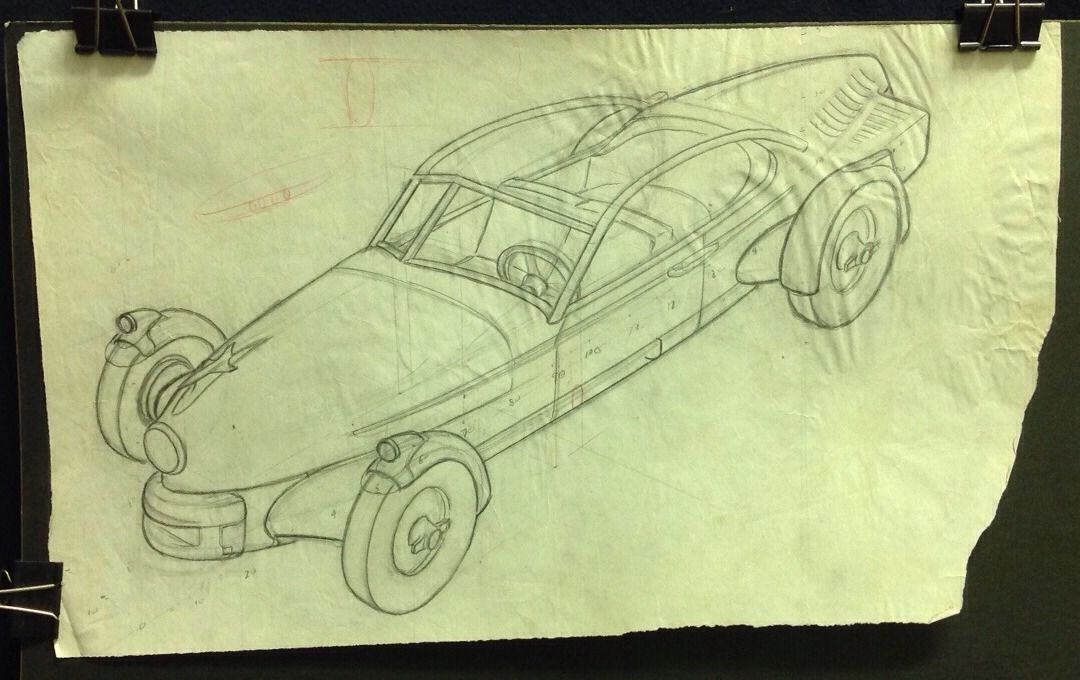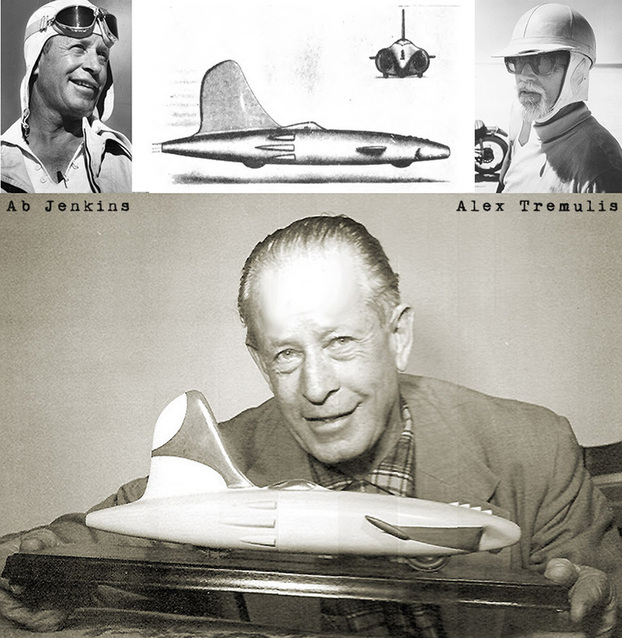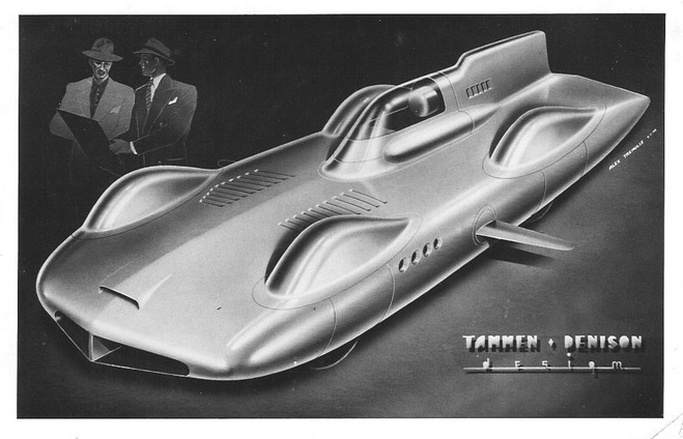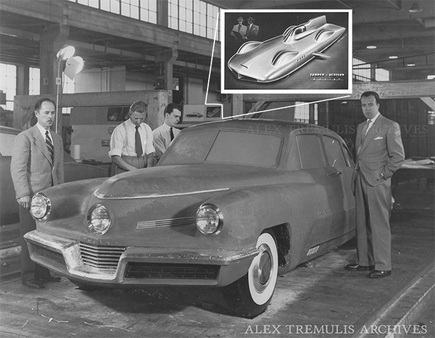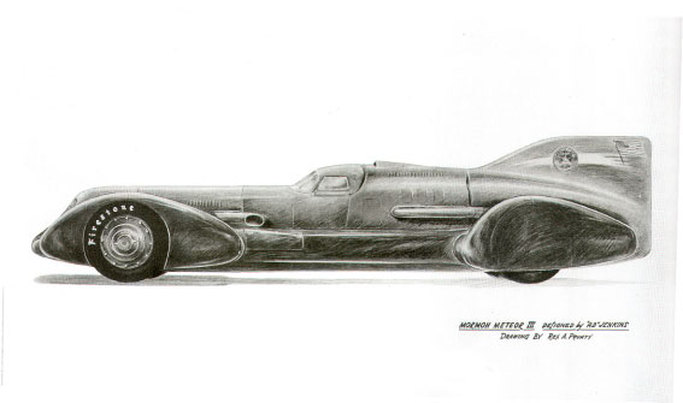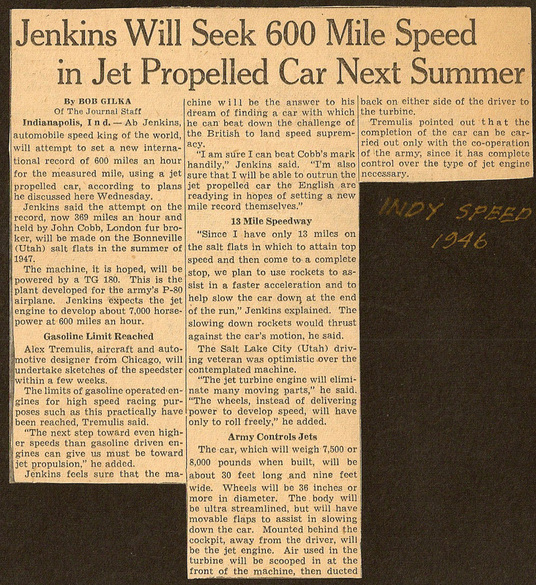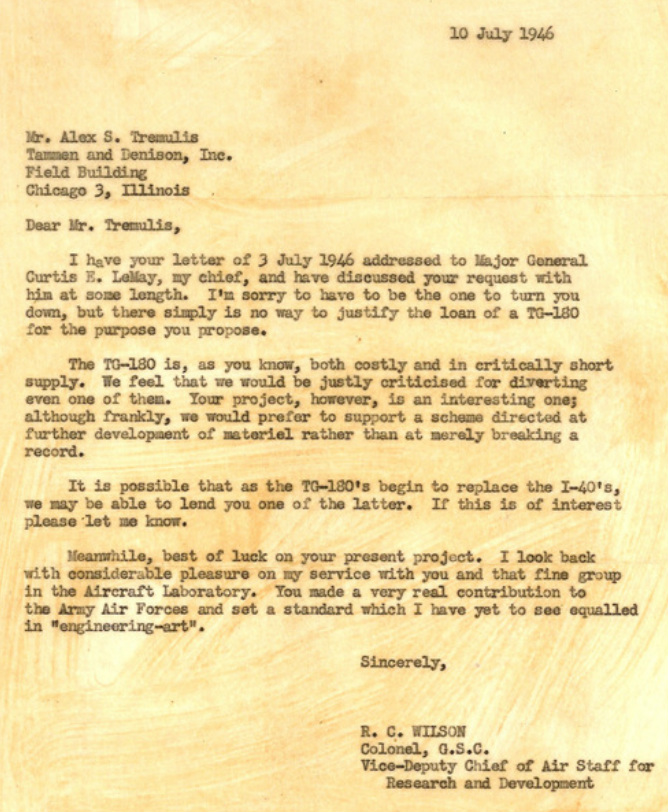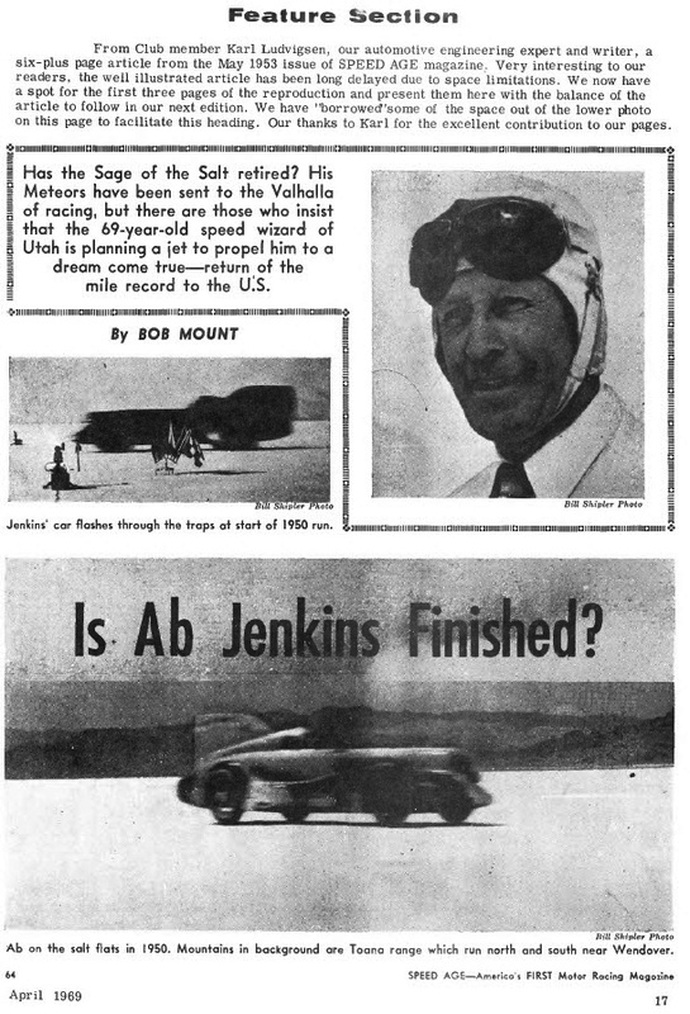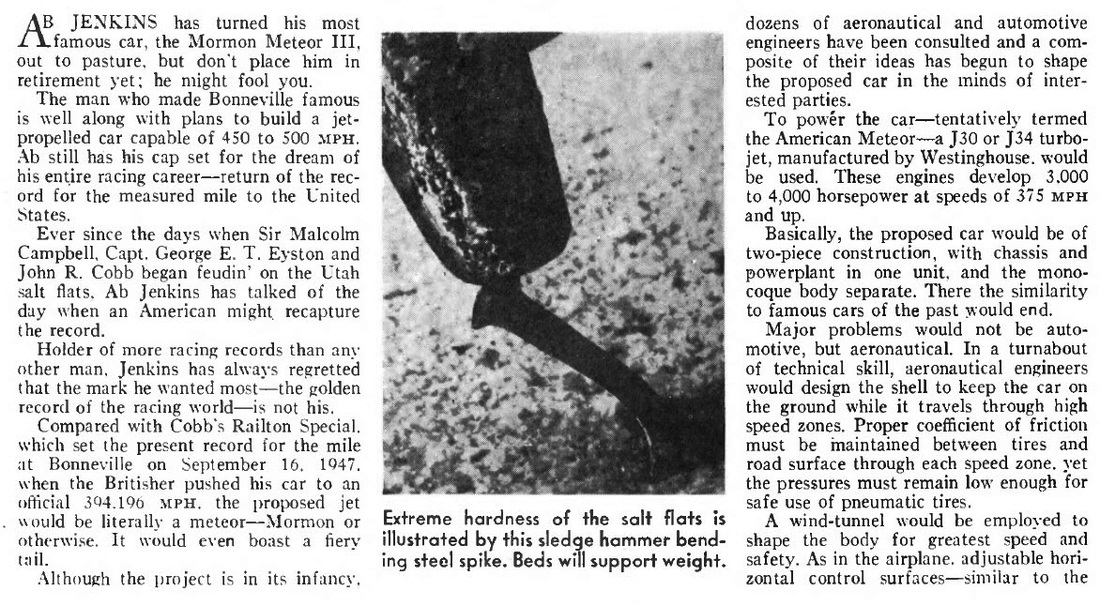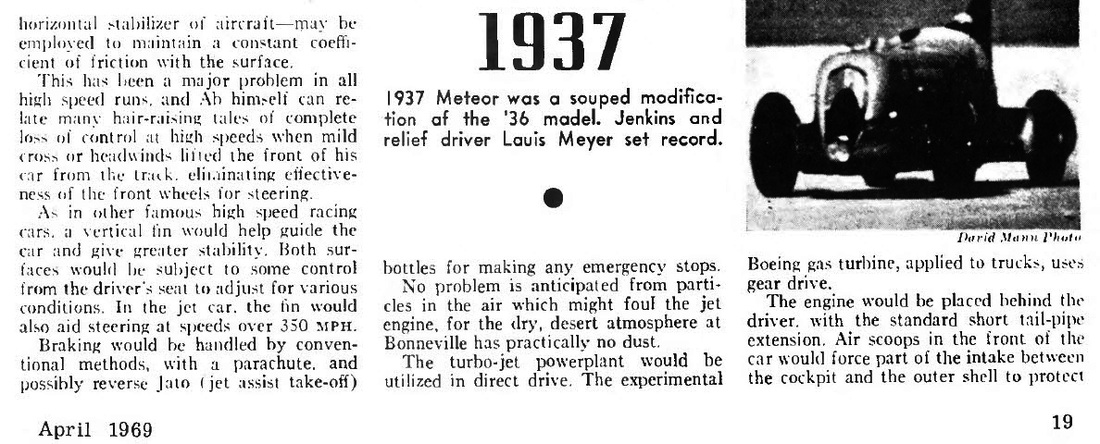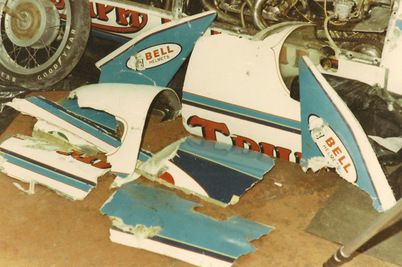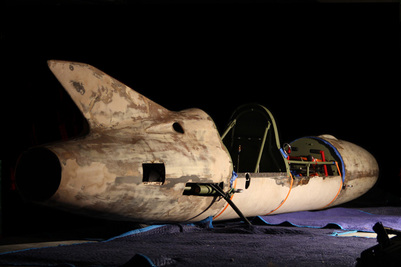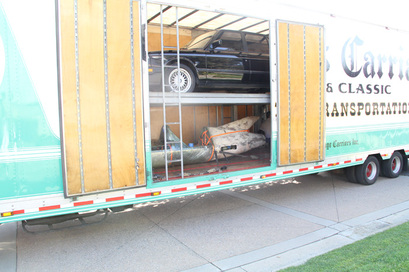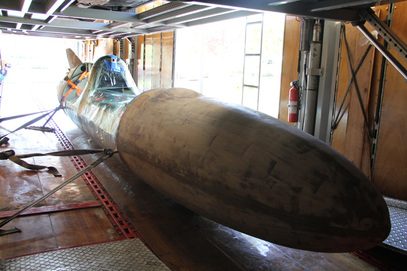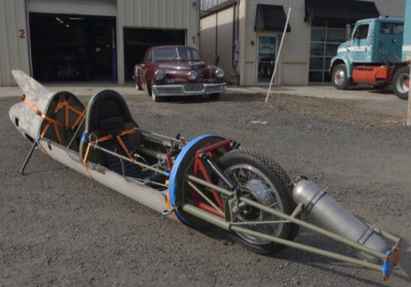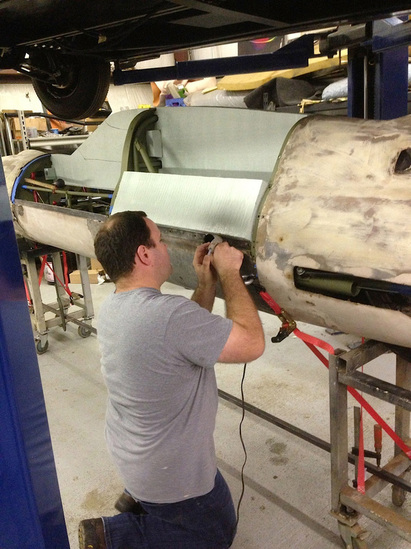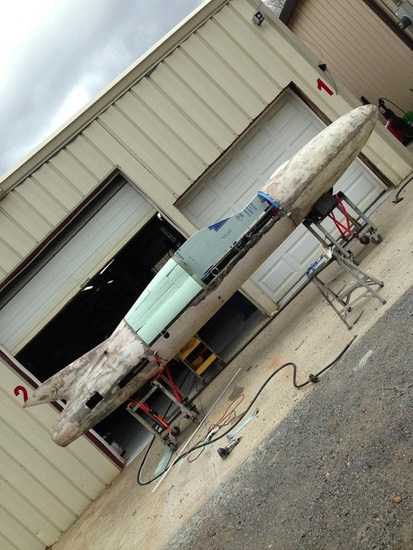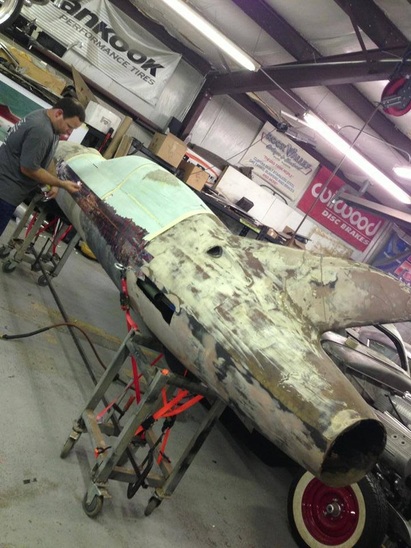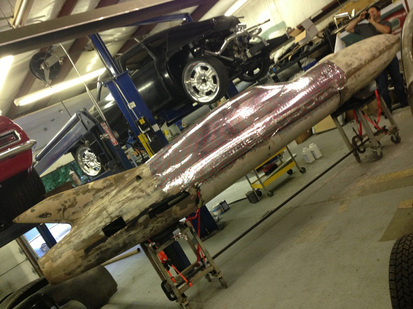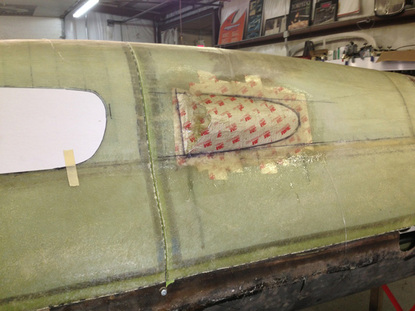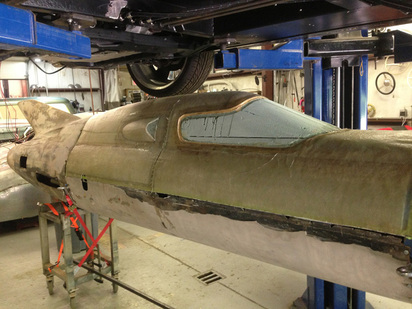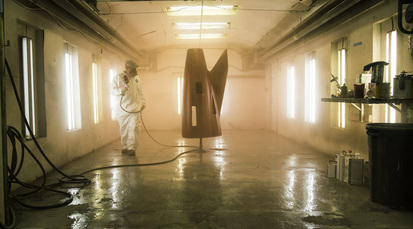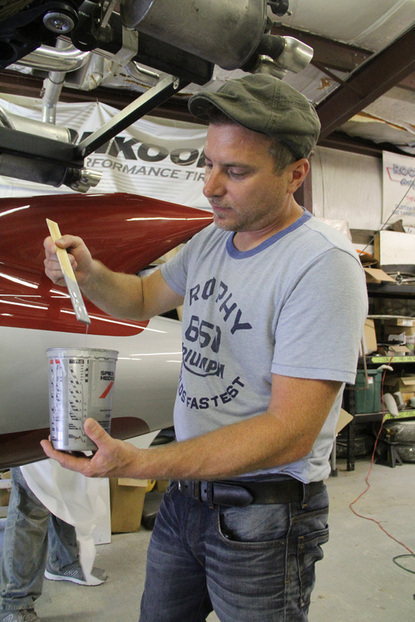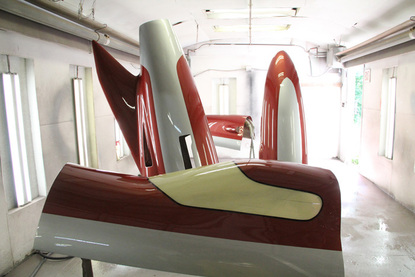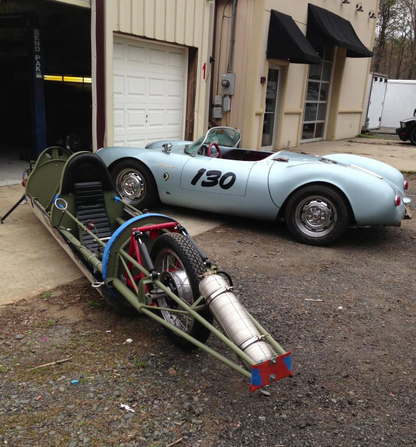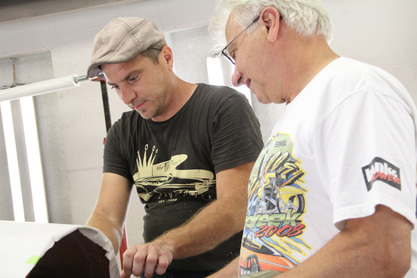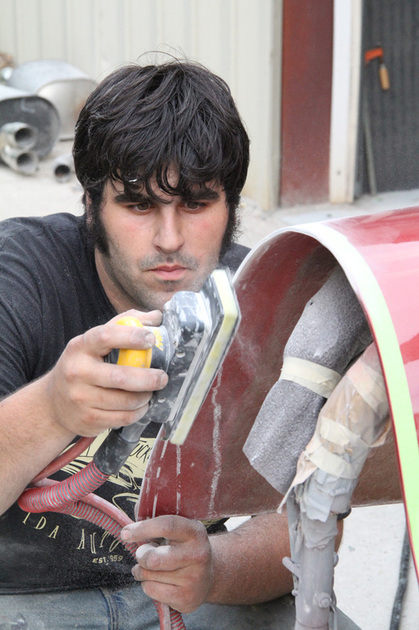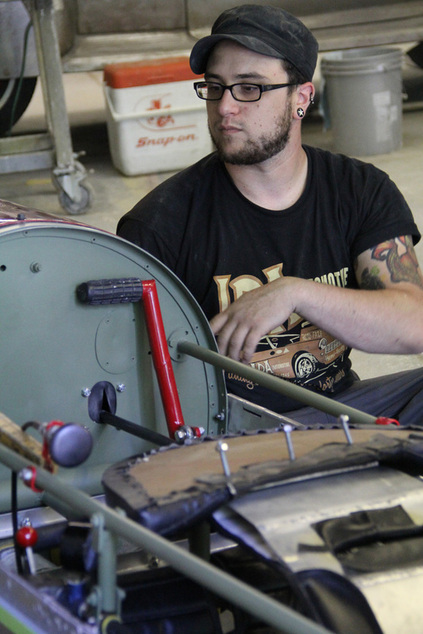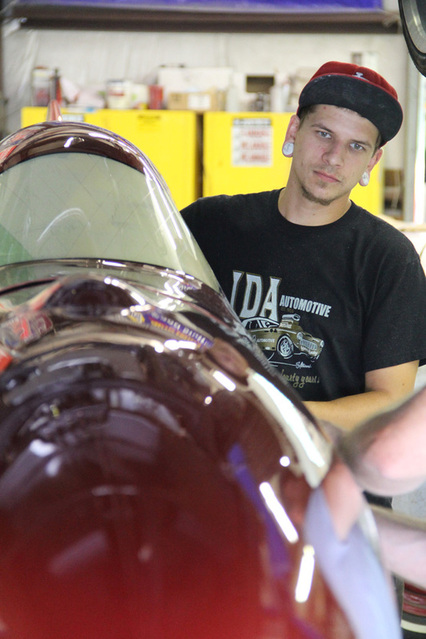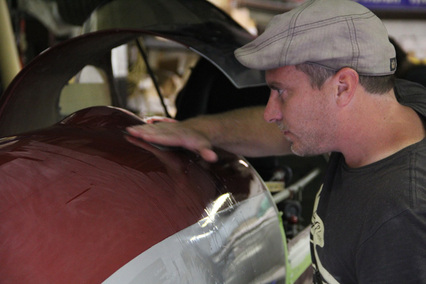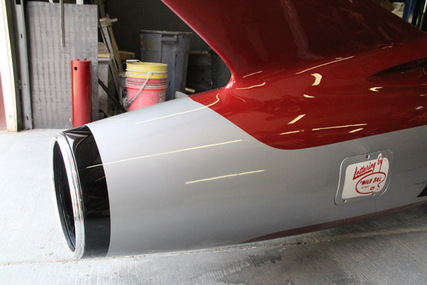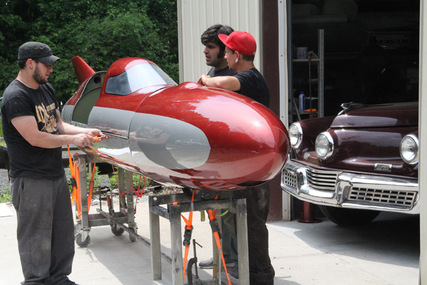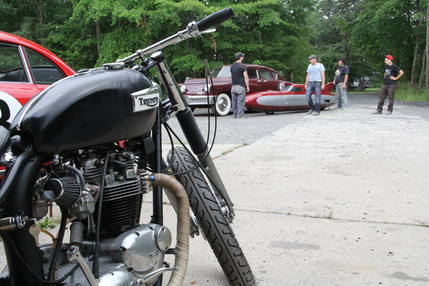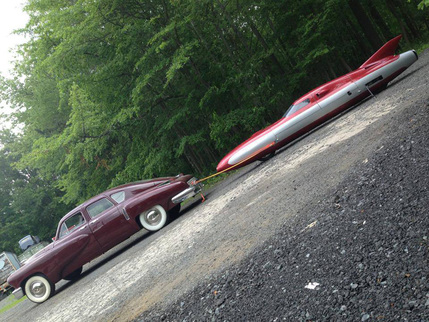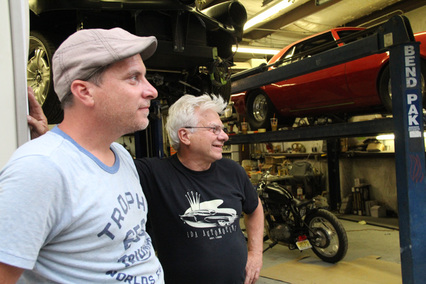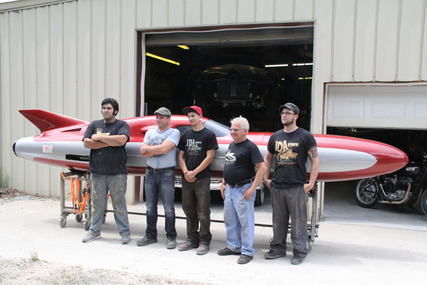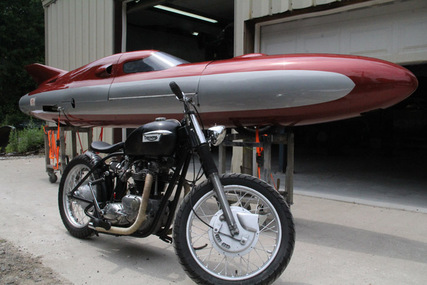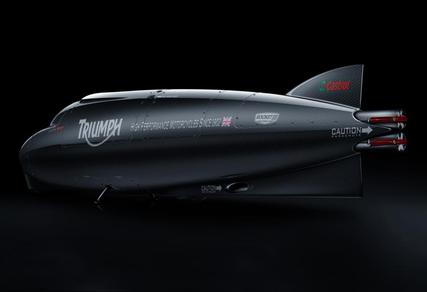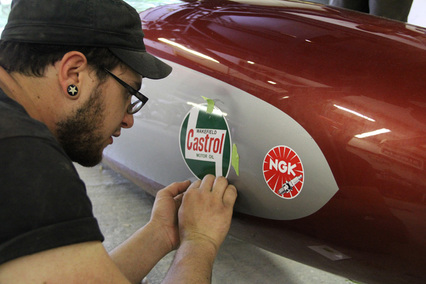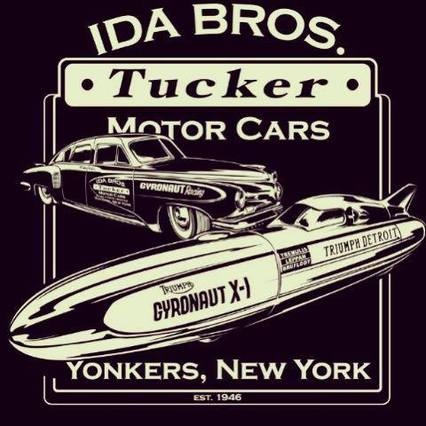
Here's a snippet from the upcoming documentary about the Triumph Gyronaut X-1, brought to you by Curt Wallin and John Greene, the producers/directors for the award-winning documentary "The Boys of Bonneville - Racing on a Ribbon of Salt". They're at it again, this time bringing the Gyronaut back to life along with the great stories from the people who made it all happen. Hang on for the ride of your life...
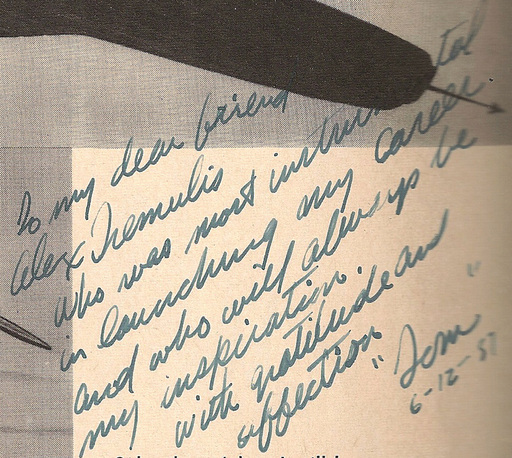
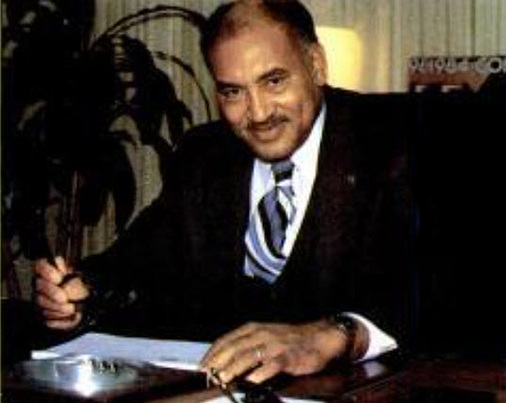
With the great news ( Hemmings: The Lane Motor Museum and Thrustcycle team up to restore the Gyro-X) that the Alex Tremulis-designed Gyro-X is planned to be restored in time for what would have been Tremulis' 100h birthday, it's fitting to note a unique perspective the team enjoyed of the Apollo 7 launch. On the Board of Directors for the two-wheeled car company was astronaut Tom Stafford. Recognizing a great opportunity for alternative Lunar Rover designs, the team was brought in to discuss their gyro-stabilized concepts. Tremulis, gyro expert Tom Summers, and two others (yet to be identified) and their spouses all made the trip. The GyroDynamics Lunar Rover was to be based off of their Trailmobile concept built for the US Forestry Service. The Trailmobile was uniquely suited for otherwise unaccessible paths by combining the ability to traverse a narrow road just inches wide with the ability to carry a heavy payload without tipping over. The team proposed this concept would be ideal for a Lunar Rover with the same qualities. To save space, the "Gyronaut" Rover was going to be folded up in transport to the surface of the moon. Once the Lunar Lander's landing gear was safely planted on the moon, the crew would unfold the Rover underneath the astronaut's capsule. Once the Rover's stabilizing gyro was powered up to speed, the Rover would be unable to be tipped over and could maneuver around large boulders and obstacles in order to get to its target destination. The full history of Tremulis' plans to get to the moon can be found HERE. Below: Probably during the presentation to NASA, astronauts Gene Cernan (left) and Tom Stafford (right) share some humerous thoughts on the project. Astronaut Gene Cernan during one of the welcoming cocktail parties for their distinguished guests. A dream come true: Having astronaut Tom Stafford give a tour of the replica Lunar Lander to the GyroDynamics team. Throughout their stay, it's apparent the team was granted unparalleled access to areas probably never seen by the general public. The NASA Crawler-Transporter. The NASA Crawler-Transporter. Apollo 7 on the launch pad. Readying the launch pad at the base of the huge Saturn rocket. A view not seen by many: Looking down the top of the 221 foot high rocket. The topmost part of the Saturn 1B rocket contains the command module where the astronauts reside. With the massive rocket's support and access platform pulled back, a dizzying view down over 25 stories is seen. The platforms coincide with the various functions that are required to prepare the rocket for launch. Tom Summers (?) with a Mercury space capsule. October 11, 1968: The team getting shuttled out to the viewing area for the launch. The full team from GyroDynamics picks out their spot.
Below: Liftoff! The remains of the support tower after Apollo 7 has departed. Summers messes around with one of the area's residents. Unfortunately, the Gyronaut Rover never got off the ground, and financing difficulties forced all the projects into never never land. Here a forelorn Chrissie Tremulis muses over what could have been: The Gyro-X car and the Trailmobile, both languishing in neglect and exposed to the elements. The Gyro-X did make it out to the Bonneville Salt Flats, however, at least in 1/8 scale model form. This model's whereabouts is still unknown. If you have any information, please contact us. And pay a visit to the FaceBook page to stay up to date...
The 1950's saw more than its share of UFO-mania thanks in large part to the visions of Alex Tremulis. His illustrations were perhaps the first to capture the imaginations of the public on a mass scale. His first drawings of flying saucers and little space martians appeared around the world and would subsequently influence the public's perception of what aliens from another planet might look like. But not only did Tremulis visualize these possibilities, he also described the feasibility of space travel in layman's terms such that anyone could relate to the possibility that Earth had been or was being visited by martians.
Tremulis clearly foresaw future space travel two decades before Man ever set foot on the moon, and in an uncanny conclusion to his story, he accurately predicted the dangers of re-entry into the Earth's atmosphere. This post is dedicated to those brave explorers who perished in the Space Shuttle disasters, as today, February 1, marks the tenth anniversary of the Space Shuttle Columbia disaster.
The following article was written by Alex Tremulis shortly after the first descriptions of UFO crash landings in both Roswell, New Mexico and another report Mexico. Coincidentally, the Roswell incident just happened to occur less than three weeks after the June 19, 1947 unveiling of the Tucker automobile! MAYBE WE ARE BEING SHOT AT - WHO KNOWS? Personally I have never seen a flying saucer, disk or any semblance of a space craft. I was one of many fascinated the night of March 9th [1950] when the radio blared forth the story of the crash landing of a strange object and it’s midget pilot in Mexico. In spite of Mr. Gimmick, the dynamite salesman later backing off of his original story, there were still left traces of evidence by his story substantiated by other rumors that there was some still unexplained happenings that might lend credence to his original story.
I, for one, have never been of the opinion that we earthlings enjoyed a monopoly of all the brains in the solar system. Many strange happenings dating back as far as 1870 have not been thoroughly explained to my satisfaction. As an example, mysterious formations of lights apparently from visiting space craft flying in strange formation were observed by ships at sea. The mysterious light signals from Mars as observed by Professor Lowell of the Lowell Observatory in the year 1900. Many thousands of people in Englandare said to have viewed a strange motorized object in the sky for a period of hours several years before man made his first conquest of the air. Also the strange formation of air craft, more in number than any amount based in the United States, were observed by thousands of witnesses in 1914 at Ottawa Canada cannot be taken lightly. These strange visitations are a matter of record in the official astronomical records of their respective years and can be inspected by anyone desiring to do so.  Guglielmo Marconi on board his yacht, Electra And lastly, the strange signals received by Marconi’s yacht Electra from the planet Mars at a time when the two planets were at their closest. These signals were never satisfactorily decoded by the experts who attempted to do so. However the art of decoding must have been furthered in World War II and a further attempt to decipher the tape of the Electra records might shed new light on the subject. Perhaps now we could dismiss these strange phenomena as optical illusions, or hallucinations to everyone’s satisfaction.
However the findings of Commander Robert B. McLaughlin of the USN and a group of navy scientists who tracked a flying saucer and made known their data very definitely to my satisfaction offer convincing proof that these space craft are visitors from another planet.
Before expounding further on my theories I must first state that I am a creative stylist by profession possessed of a meager understanding of principals of engineering. My experience in the field of aeronautics consists of four years at Wright Field, Ohio, where I served as chief of the Design Illustration Unit, a Division of the Design Development Division of the Aircraft Laboratory. During my tour of duty I was exposed to the evolution of rocket development and have in my mind an approximate idea of the necessary time in research involved to perfect rocket fuels, nuclear energy power plants, rocket missiles, radar and space navigation plus the metallurgical problems alone that must be solved before we on earth can duplicate the performance figures of the saucer tracked by the navy scientists. The speeds disclosed exceeded the hypersonic region of velocity and bordered on the speed necessary to escape the earth’s gravitational pull.
For reasons of military security I do not care to state my estimate of time necessary to develop missiles capable of speeds observed by the navy scientists at White Sands, I regret I must also admit that I would still have to penalize my estimate by several years because of our unwilling Congress who have thwarted the Air Force at every turn by refusing to allocate the funds necessary to maintain air superiority on the planet. (To Ed. - I believe this paragraph should not be omitted in order that this article receive the blessings of the AAF Wright Field Ohio). However at this writing if the nuclear energy project for the propulsion of aircraft has been already put into practice then it is entirely possible that these objects are earth made. They may even be subcontracted to many manufacturers piecemeal in order to maintain the secrecy as evidenced so eloquently by the Manhattan project where many of the subcontractors actually believed they were working on something for Mayor LaGuardia. I believe at this writing that this project has not as yet been consummated.  Alex Tremulis rendering of a flying saucer headed towards Earth, 1948/50 From the fragmentary evidence that I have at my disposal, mainly reports in the newspapers, I have attempted to sketch my conception of such a space vehicle. The Mexican report that the disk was damaged on the bottom side leads me to believe that the vehicle was also designed for vertical descent as well as interplanetary space travel. Due to the difference of density of our Earth’s atmosphere the midget pilot could have very easily miscalculated the wing loading, or better yet the disk loading, of his craft and crashed fatally while attempting to land.
In my opinion, there is nothing wrong about the configuration of a so called disk that does not apply to good aerodynamic law. Its very form suggests maximum of lightness in conjunction with maximum strength as the skin of the ship itself absorbs all stresses in its most efficient form. Its very form allows a receiving of maximum solar energy to be transmitted to the powerplants. The propulsion units must no doubt be of a highly developed form of nuclear energy in order to have the apparently limitless range of millions of miles. Only from a highly developed state of energy could the tremendous velocities of 25,000 MPH and upwards be possible in order to escape the earth’s gravitational pull. The required maximum escape velocity would of course be determined by the respective planets gravitational pull on the space vehicle. It is entirely possible that these space travelers may unintentionally become prisoners of our planet.
As an example let us say the escape velocity of a ship based on the planet Mars was 16,000 MPH and that the maximum thrust of the Martian vehicle was designed for 20,000 MPH. A journey to earth, assuming the fuel of course could be replenished by solar energy, would be entirely possible but after arriving at earth it would be lacking an additional 5,000 MPH escape velocity necessary to return to Mars. The ship would be reduced to aimlessly wandering around our earth until its fuel gave out. If we on earth should solve the mysteries of space travel it would be far more economical to use the moon as a stepping stone to the planets. The gravitational pull of the moon is one-sixth of that on earth and a rocket trip from the moon to Mars would require considerably less fuel than would a direct trip from earth to Mars. Therefore I predict the nation that stakes its claims on the moon first will enjoy a monopoly of interplanetary space travel.
Perhaps these strangers at the moment on their reconnaissance flight are afraid of us and are reluctant to land. There is much evidence to support their fear that ours is backward civilization. Our seemingly wasteful wars that take place every generation only tend to create greater misunderstandings. The minuteness of our progress in the field of transportation alone must be staggering in their minds. For example, the archaic principal of motor cars, driven by bulky power plants located in the front, must impress them as progress little removed from early Roman chariot designs. I for one would frankly welcome meeting the little strangers, if for no other reason than to exchange notes on their land vehicles which we earthlings call automobiles. It is my opinion that any race of people capable of mastering the mysteries of inter-planetary space travel would be endowed with a culture of so advanced nature that the very word “destruction” would be utterly meaningless to them. The worst we could expect is that they might make an attempt to civilize us.  Alex Tremulis' language decoder rendering, 1948/50 At any rate I do not think that there will be an existing language barrier. They no doubt at our first meeting will have facilities in the way of unique instruments where our first words will be instantly decode into their language. Perhaps their first request might be that we turn over to them the wireless tape recording of the yacht Electra so that they may decipher their encoded messages we failed to understand in 1920. I think it indeed ironic that the great Siberian meteor blast of recent years occurred when Mars was at its closest to earth. It is most logical to plan such a trip when both planets are at their closest distance.
As I gaze into the heavens on nights when the sky is streaked with the trails of meteors, I cannot help but think that some space pilot in a rocket ship miscalculated the Earth’s protective atmosphere while streaking towards us at 10 to 15 miles per second and found it too late to apply reverse rockets. Those streaks in the sky may ultimately be a name on a monument on Planet “X” dedicated to explorers of the universe.
Then again, I don’t know: MAYBE WE ARE BEING SHOT AT - - WHO KNOWS?
ALEX TREMULIS March, 1950: Air Line Pilot magazine lends a serious insight into Tremulis' musings... Another one of the many periodicals of the day to pick up Tremulis' story... June 23, 1950: Tremulis was now one of the top designers at the struggling Kaiser-Frazer, but K-F felt it newsworthy to get in on the UFO craze that was starting to sweep the nation. K-F uses Tremulis' insights to illustrate how their designers look towards the future. January 27, 1951: Tremulis and Pete Pagratis team up to capitalize on the UFO craze that they helped create. They file a design patent application for an automobile hood ornament based on Tremulis' flying saucer rendering. It issues 7 months later. Two different versions of the hood ornament are manufactured, a single piece body (left) and a two-piece version (right). A light bulb in the center illuminates the dome. At least three different colors were available for the dome: Yellow, green and blue. August 20, 1951: Through Fortune Manufacturing, 4,000 hood ornaments were manufactured, falling far short of the proposed 150,000 units that were targeted. August 20, 1951: With the shortfall in production units, the contract with Fortune Manufacturing is terminated. September 16, 1952: Noting that the then-current market size for sci-fi items was in excess of $75 million, Tremulis and Pagratis seek to license the design in return for royalties. It is still unknown if there were any takers for licensed items incorporating Tremulis' flying saucer. By 1952 Tremulis had left Kaiser-Frazer and is busy designing futuristic show cars for Ford, but still maintains his sense of humor about space aliens. He adds these hieroglyphics to the bottom of his alien drawing and translates them on the ticker tape for us: "ALL SPACE BEINGS SEND XMAS GREETINGS TO ALL FORD DESIGN EMPLOYEES. SIGNED GORT" 1962: The Sci-Fi mania was clearly heavily influenced by Tremulis' illustrations. Indeed, one such adaptation of Tremulis' martians shows up in 1962 as Topps trading cards for their series on Mars Attacks. Today, these cards are recognized as the most valuable non-sports cards in history. The original artwork for the illustration at left sold for $90,000, with individual cards worth hundreds of dollars. 1996: Topps' Mars Attacks theme is made into a full-length feature film by Tim Burton. The side-by-side similarities between Tremulis' Gort and the Martian invaders is readily apparent. Tremulis' vision for Gort was decidedly much more friendly than the carnage Mars Attacks inflicted on Earth. February 1, 2003: The Space Shuttle Columbia Disaster July 1944: Alex Tremulis designs the two-stage vertical interceptor. Launched by a rocket booster into the upper atmosphere where the spent booster is jettisoned, the aircraft/spacecraft ("jeterons" control the attitude of the plane where there is no air) returns to Earth and lands like a standard jet. It gets re-armed and re-loaded onto another booster rocket for another mission. This project led directly into the Dyna-Soar project of the 1950's and subsequently, with the lessons learned, is incorporated into the Space Shuttle program. The full story can be read HERE. As I gaze into the heavens on nights when the sky is streaked with the trails of meteors, I cannot help but think that some space pilot in a rocket ship miscalculated the Earth’s protective atmosphere while streaking towards us at 10 to 15 miles per second and found it too late to apply reverse rockets. Those streaks in the sky may ultimately be a name on a monument on Planet “X” dedicated to explorers of the universe. Alex Tremulis, 1950 It is mind-boggling that Tremulis' prophetic vision of Planet "X"s explorers would end up being our own Shuttle astronauts piloting a rocket ship that evolved directly from his vision of what a space ship could be. RIP Columbia Crew: David Brown, Rick Husband, Laurel Clark, Kalpana Chawla, Michael Anderson, William McCool, and Ilan Ramon. RIP Challenger Crew: Ellison S. Onizuka, Sharon Christa McAuliffe, Greg Jarvis, Judy Resnik, Michael J. Smith, Dick Scobee, and Ron McNair.
Check out (and LIKE) the Gyronaut FaceBook Page for more pics and info...
The outrageous concept cars of the 1950's Motorama Auto Shows not only captured the imaginations of the motoring public, but they also provided competitors a snapshot into the direction that a major brand may be headed. Such was the case for Ford's head of Advanced Styling, Alex Tremulis, to bring his camera along to the 1956 Motorama that showcased the pinacle of 1950's designs from each of the major car companies. Below are some of Tremulis' detail shots of fins, fenders, scoops and chrome that would be catalogued in the mind of the designer to someday later be retrieved, tweaked, and incorporated into various other visions of the future. There are plenty of photos and stories of these concept cars that can be found on the internet, however, these rare color shots give you a sense of what Tremulis felt was important or innovative for each of these important cars. You're seeing exactly what he saw through his viewfinder. Enjoy the ride...
The 1956 Motorama would be the last one held under the direction of the great Harley Earl. There were no Motoramas held in either 1957 or 1958, the year that Earl handed over GM's design reigns to Bill Mitchell, so this marked the end of an era in car design. So it's fitting that this show was complete with a theatrical stage revue as well as a short film called Design for Dreaming to introduce GM's vision of the future.
It's interesting to note that all of the non-GM cars (Mercury, Chrysler, Packard) that Tremulis photographed that day were built by Ghia. 1956 Firebird II 1956 Pontiac Club de Mer 1956 Buick Centurion 1956 Oldsmobile Golden Rocket 1955 Pontiac Strato Star 1955 Buick Wildcat III 1956 Mercury XM Turnpike Cruiser (Ghia) 1956 Chrysler Plainsman (Ghia) 1955 Chrysler Flight Sweep I (Ghia) 1956 Packard Predictor (Ghia) Don't forget to get immediate updates by "LIKE"ing the Gyronaut FaceBook Page... All photos copyright 2013 The Alex Tremulis Archives
In 1939 cars were becoming much more than just a means of transportation, especially in the entertainment industry, where to get the part you had to look the part. Cars became more of an expression of the owner and were often customized with exotic bodywork and vibrant colors. The trend did not escape Eleanor Powell, one of Hollywood's top box office draws. She saw an opportunity to start a car customizing business catering to Hollywood's elite, and set up shop on the famous Rodeo Drive.
Alex Tremulis may have come to the attention of Eleanor Powell through one of his customized Auburn-Cord-Duesenberg's for Chicago department store magnate Maurice L. Rothschild. According to newspaper accounts, Rothschild was delighted with Tremulis' remodeled and streamlined automobile. In any case, Tremulis got a phone call from someone claiming to be Eleanor Powell.
As Tremulis tells it: "It was a red-hot box office name at the time so I answerd 'Sure it is'. I figured it was one of the office girls, or maybe one of Chrissie's friends, so I kidded along and said: 'Well, honey, I'm glad you called. I've been expecting you...' and I guess she was used to having this happen when she called people for the first time. So she asked if I was the same Tremulis who had been with Auburn-Cord-Duesenberg and I said I was. She said to meet her at the Drake Hotel in Chicago where she was staying, that she had a proposal to make. I met her at the hotel and she explained her custom auto company operation and said that if I was interested, her public relations and partner in the company, Sid Luft, would be by the next day to fill in the details." Sid Luft (left) was once an amateur boxer and bar-room brawler and had the nickname "One-Punch Luft." He was a pilot in the Royal Canadian Air Force and in the early 40's was a test pilot for Douglas. (source: wikipedia)
Tremulis: "Sid Luft had been her public relations man and she wanted to get him started in the customizing business. Luft and I talked about the plan which would have me design and direct the building of custom cars. It sounded great. He had tried several other things, but now was concentrating on customizing Cadillacs. The first one he built was a very nice custom Cadillac, but instead of selling it he started running around with the car. Pretty soon it got used, so when Eleanor Powell came to Chicago she hired me to go to California to put Sid’s business on a business basis. So I came to California." At left is presumably the 1939 Cadillac Convertible Coupe picked up from Feferman Motor Sales and driven from South Bend to Hollywood. Luft's letter calls out for a Series 60, but this may in fact be a Series 61. That's 25 year old Alex Tremulis standing next to his work in progress. At left is what appears to be the completed project. The car was originally intended for Eleanor Powell, however she may have sold it a short while later to Bill Burlingame of National Cash Register in Cincinatti. Apparently it was Burlingame who took it to the Trocadero Nightclub where it caused a sensation.
Tremulis: "I was surprised the next day to get a telephone call from Jimmie Fidler, the famous Hollywood reporter. He said he had seen Burlingame in the car he had purchased from Miss Powell and wanted to know what that color was called. I asked him what time he had seen it, and he said it was about 9:00PM. "Oh, we call that Night White", I told him. He made a big thing about it in his column and over the air. Soon we got a call from the big Don Lee Cadillac sales agency wanting to know if we could furnish them with the formula of that Night White paint. I told them we couldn't let the formula out of our hands, but that we'd either paint the cars ourselves or sell it to them already mixed. I had to rush around and mix some paint in hopes it would look like the same stuff we'd used on the original Night White car. I had used some orange, maroon and purple in very small percentages and soon hit on the right proportions. We sold a lot of Night White to the Cadillac agencies in the area and we did a lot of $150 paint jobs by farming them out to paint shops nearby for $50. Many people came in with a wide variety of cars to be lowered, have fender skirts added, get louvered or to receive a touch of fancy detailing. The cars ranged from the most elegant ever manufactured down to sporty '32 Ford roadsters." A closeup of the front end provides an agressive and imposing appearance. It's clear why such a car in the Night White livery had created a media storm.
The front end treatment Tremulis imparted on the Powell Cadillac does bear some resemblance to another one of his customs. At left is a 1938 Lincoln K V16 that Tremulis along with Bob Koto and Ralph Roberts customized while at LeBaron. Perhaps some inspiration had been taken from this car? Photo compliments of concpetcarz. Fast forward from 1939 to the 1960's. The car had changed ownership an unknown number of times and its famous history was almost forgotten. But that didn't stop its former owner from attempting to track down its origins, and in 1971 he contacted the all-knowing Strother MacMinn in hopes of an answer. At left and below, Schneider's car in the 1960's. By then, the Night White had been resprayed in favor of a darker hue, but the unique design elements that went into its creation remained. (Photos by Roy Schneider, Cadillac Database) MacMinn probably could tell who had done the job in an instant, and certainly would have heard his friend Tremulis' stories of Eleanor Powell's Custom Motors, so the wheels had been set in motion for the original story to get back to its former owner. Tremulis recounts its history in the letter at left.
At present, it is unknown if the car's provenance with Eleanor Powell, Sid Luft and Alex Tremulis has ever caught back up to the car. It's current whereabouts and current owner are unknown. There may be as many as five more as-yet unidentifed cars that Tremulis had created during his tenure with Eleanor Powell. On July 28, 1943, an article was published in the Ravenswood-Lincolnite newspaper about Alex Tremulis' wartime designs. The article also gave a short bio, a clip of which is shown at left. Coincidentally, the Maharajah of Indore also purchased a customized Duesenberg designed by Tremulis' mentor, Gordon Buehrig. In addition to these two cars, Tremulis wrote of two additional cars he built, possibly while at Custom Motors: A Cadillac for Prince David Mdivani, and a Duesenberg restyled from the chassis up for Jules Stein. The usual clientele of Custom Motors called for some of the largest and most luxurious cars of the times, but they were about to get a visit from the other end of the spectrum. In his American Bantam story, Tremulis describes his first encounter with one of the smallest cars in the world:
We had a little shop across the street from the Luau Restaurant in Beverly Hills called Custom Motors. One day I was having lunch at the bar in the Luau when all of a sudden I saw a little American Bantam Roadster pull up outside. There was a man in a polo uniform and two little polo sticks were sticking up out of his small little car. The chap comes in and sits down next to me. I looked at him and said, “Pretty ridiculous, big boy like you driving around in a kiddie car like that”. Of course he gave me a real funny look. He ordered a drink and then he said to me, “Do you know anything about those people across the street, Custom Motors?’ I said, “Yeah, I know them.” He said, “I’m looking for a guy by the name of Alex Tremulis, do you know him?” I said, “I know him pretty well”. He wanted to know when Custom Motors opened up, and I told him they were probably out to lunch. He said, “I’m anxious to talk to Alex Tremulis.” So I told him to finish his sandwich and then I would take him over to meet this Alex. So we walked across the street and into the shop. I had all my drawings on the wall… some real wild stuff too. He gets impatient and says, “When do I meet Alex Tremulis?” I tell him,” You’ve already met him”. We laugh and then he introduces himself. “I’m Roy Evans, President of American Bantam,” he said.
[The American Bantam story will be highlighted in an upcoming feature.] Alex Tremulis (second from left) and what is probably the crew from Custom Motors with the prototype for the American Bantam Hollywood. I was busy working on this [American Bantams] when I got a call from Eleanor Powell. Sid Luft had thought he could sell the last Cadillac I customized for her up in San Francisco. I had lowered the roof 3 1/2 inches. Sid had somebody in San Francisco that was willing to pay $6500 for the car. He had taken the car, no insurance, and eight miles out of San Francisco he went off the road at 100 miles an hour. He totaled the car which ended his automobile business. Today, the site of Eleanor Powell's Custom Motors is still catering to Hollywood's fashionistas. It's currently occupied by Georgio Armani of Beverly Hills. If you are looking for some customized tailoring, you can be accomodated exactly where Eleanor Powell, Sid Luft, Alex Tremulis and the crew of Custom Motors custom tailored some of the finest automobiles ever created... If you have any photos or other information on these Custom Motors cars from 1939-1940, please contact us: 1939 Cadillac Model 60 or 61 Convertible Coupe for Eleanor Powell, or Bob Burlingame (CEO of NCR), or Roy Schneider Duesenberg (unknown model) for Jules Stein (founder of MCA records) Auburn, Cord or Duesenberg for Maurice L. Rothschild (Chicago area merchant) Cadillac (unknown model) for Prince David Mdvani Limousine for the Maharajah of Indore Unknown for King Ghazi Ihn Feisal of Iraq (perhaps LeBaron?) ...and don't forget to "LIKE" the Gyronaut's FaceBook page to stay updated on the latest events...
Take a walk through the crowded aisles of the 1955 Paris Motor Show with Alex Tremulis. Held the first week in October, his rare color Ektachrome Transparencies capture the details of some of the most revolutionary cars the automotive styling world had seen to date. These photos, taken by Alex Tremulis while he was head of Ford's Advanced Design Studio, represent the styling cues that captured his attention and would influence the design of Ford's future models in one form or another for many years to come. Cleaning the once-airborne tar and nicotine off all the fresh paint was surely a daily ritual... Citroen DS Citroen DS Citroen DS Citroen DS BMW 507 BMW 507 BMW 507 Chrysler ST Special Facel-Vega Facel-Vega Jaguar Pinin Farina Pinin Farina Ferrari Ferrari V12 Maserati Maserati A6G (left) Pegaso Z102 by Touring Pegaso Z102 by Touring Pegaso Z103 by Touring Pegaso Z103 by Touring Porsche 550 Spyder Boano Karmann Ghia Karmann Ghia Cadillac Eldorado Brougham Gaylord Gladiator
Tremulis' friends, Jim and Ed Gaylord, brought their Brooks Stevens designed Gladiator to Paris for its debut. The syling went through several more iterations before their efforts were shelved. Gaylord Gladiator
Retractable hardtop. Gaylord Gladiator More information on each of the cars pictured will be posted as it becomes available. To be immediately notified of any updates to these pages as they occur, please "LIKE" the Gyronaut's FaceBook Page. All photos copyright 2012 The Alex Tremulis Archives.
1965 started out on a high note for the Gyronaut team. It was entered in the Autorama held at Cobo Hall in Detroit where it took home a trophy for top honors in its class as well as one of the top prizes of the Autorama, the coveted P.A. Sturtevant award for engineering excellence, an award typically given to hot rods with twice the number of wheels as the motorcycle streamliner. At this point, the Gyronaut was still a fresh build. It hadn't been run yet and still had no kick stands. The retractable skids would be worked out over the following months primarily by Maynard Rupp, who would also go on to win the prestigious Riddler Award the following year for his 1966 Malubu SS396 Funny Car, "Chevoom", sponsored by Gratiot Auto Supply. The weekend was captured in photos by the team of Bob Leppan, Jim Buflodt and Alex Tremulis. Bob Leppan suited up with the Gyronaut in front of Cobo Hall. An early preview of the twin engines.
Setting up the Gyronaut display inside the show. Chassis by Ron and Gene Logghe, body by Vince Gardner and Bob Mattson, and a wishful STP sticker above the Gyronaut logo, hoping for sponsorship money from Andy Granatelli. Extremely close quarters for the Gyronaut display, especially with the streamliner measuring in at 18 feet long, but still not high enough to even clear the headlights of the nearby unidentified hot rod.
In good company: Immediately behind the Gyronaut display is the famous Dodge A100 pickup, the Little Red Wagon, then tuned by Dick Branstner and run at the Motor City Dragway, formerly International Raceway Park (I.R.P.). It would go on to become the most recognized dragster ever, famous for its long-distance wheelies. Attracting crowds during the show. Two Triumph Bonneville 650's sit comfortably within the highly detailed engine compartment, where anything that wasn't polished or painted was chrome plated. The Gyronaut with its brand new trophies: Best-in-Class and the P.A. Sturtevant plaque sitting on the Triumph banner. The Gyronaut team's P.A. Sturtevant award started out as recognition for the winning Indianapolis 500 mechanic when the cars carried both driver and mechanic. The intent was to recognize these unsung heroes who risked life and limb riding alongside the Indy car driver who typically garnered all the attention. The torque wrench, a necessary tool of the trade, was the highest honor for engineering achievement.
The Gyronaut was also inscribed on the perpetual P.A. Sturtevant trophy, its whereabouts unknown... Don't froget to "LIKE" the Gyronaut's FaceBook Page to keep up to date when new entries post on this site...
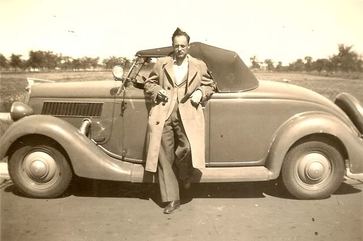
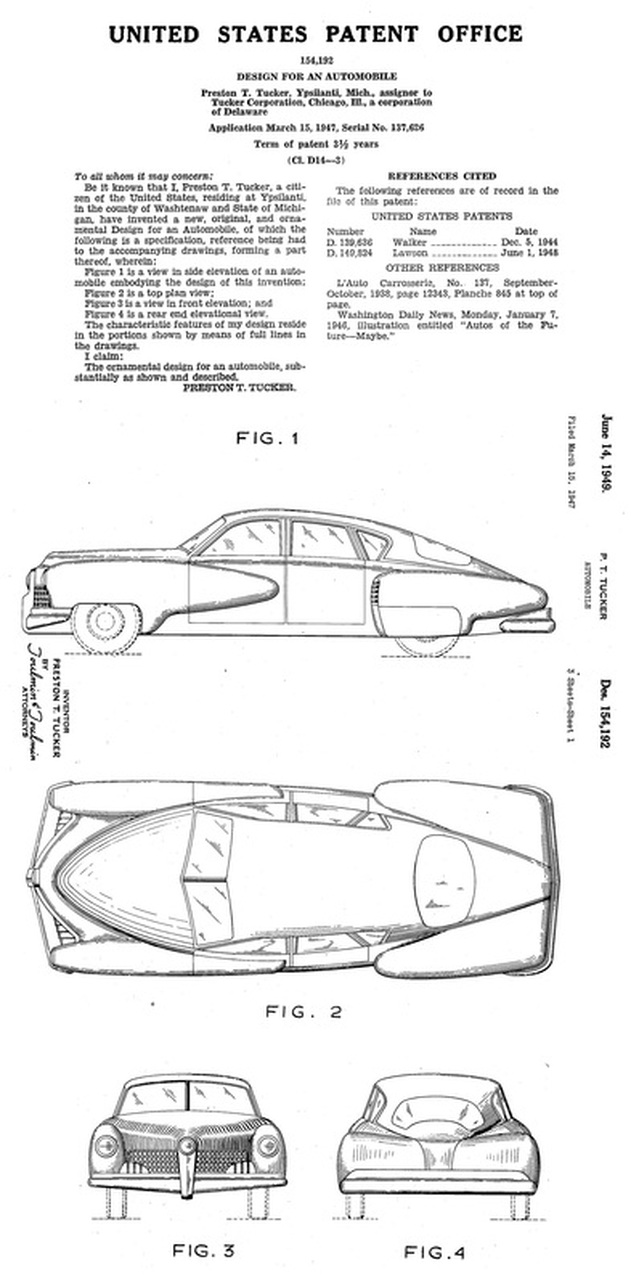
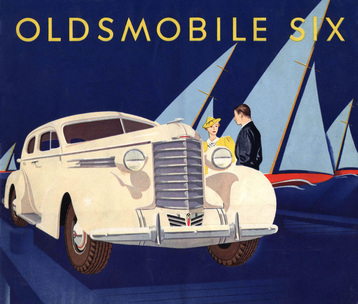
 1935 Miller-Ford Indy Car (copyright The Henry Ford) An odd connection between Preston Tucker and Alex Tremulis goes back much further than Tremulis' design work for the Tucker '48. As far back as 1934, Preston Tucker had the idea to race a production Ford-engined car in the Indianapolis 500. Tucker approached Harry Miller and Edsel Ford with the idea that a relatively stock Ford engine could power a state-of-the-art Indy roadster and be competitive. Ten cars would be built, but time constraints on their building and development meant they had minimal time to be sorted out before 1935's big race. Only four of the ten cars even qualified, and each of those failed early due to seized steering boxes placed too close to the hot exhaust manifolds. An enraged Henry Ford ordered the cars hauled away and locked up. But by 1938, the cars and parts began re-appearing at Indy. It was from one of these Miller-Ford efforts that Alex Tremulis obtained a dual carb setup and installed it in his very first car, a 1935 Ford Roadster. By 1938, Tremulis had already been head of Auburn-Cord-Duesenberg's design department and had since found a job in Harley Earl's Art and Colour division working on Oldsmobile styling.
Below, Tremulis retells the fun he had with the car that led to his early demise at General Motors.
Tremulis' Miller-Ford powered Roadster was photographed in 1938. Along with the 24 year-old Tremulis are two as-yet unidentified fans of speed. Alex Tremulis' modified 1935 Ford Roadster Duesenberg side exhaust entering the front fender beside Tremulis. Tremulis, on the right, with ? Race driver, but who? Builder/owner perhaps? | When Auburn Cord folded I went to the Oldsmobile Division of General Motors. One of the first things they wanted me to do was to buy a new Oldsmobile at special employee rates. I think they offered the car to us for $600. I still couldn’t afford a new car so I kept on driving the same old 1935 Ford Roadster, the first car I owned.
I really liked that Ford, especially after I put on the twin intake manifolds that came off of one of the 10 Ford Indianapolis race cars in 1935. At that time I had the only Ford on the street with dual intake carburetors. And because I couldn’t afford a Duesenberg, I had two exhaust pipes coming out the side. I had a lot of fun with that car. But unfortunately I did a dumb thing which was a stupid mistake on my part.
We had a big styling department picnic for the Oldsmobile Division. All of the stylists had just bought their new $600 1938 Oldsmobiles. All of them had 6 cylinders except the boss’s car which had eight cylinders. On the way to the picnic, the boss went by all the six’s, and then I made the mistake of going out after him, and passing him. I guess he was pretty embarrassed.
The next day I was called in to my supervisor’s office where I was told that what I had done had been in very poor taste. And that I should not have embarrassed the entire styling section with an old 1935 Ford. They even accused me of cheating because my car was practically a race car. I was told I had to give up the car. This I refused to do. In a matter of a month I was laid off.
I guess Roy Faulkner heard about me being out of work so he called and asked me to come back to Auburn. The Auburn Automobile Company had folded up by now, but they still had a subsidiary which was steel kitchens. There was a chap there by the name of Powell Crosley who had just developed a fantastic washing machine... the one with the round window. He made this washer pretty successful and he also wanted to build an automobile. So Roy wanted me to go down there and build the car.
So I went to Auburn...
| Does anyone have any idea as to the positive identity of these two gents posing with Tremulis and his car? Some ideas have come forth, but still no positive ID. And any clues as to which of the ten 1935 Miller-Ford Indy cars may have donated its parts to Tremulis' hot rod? Stay up to date with this and other developing stories, "LIKE" the Gyronaut's FaceBook Page. You'll be immediately updated with the latest news and information on the Gyronaut restoration project...
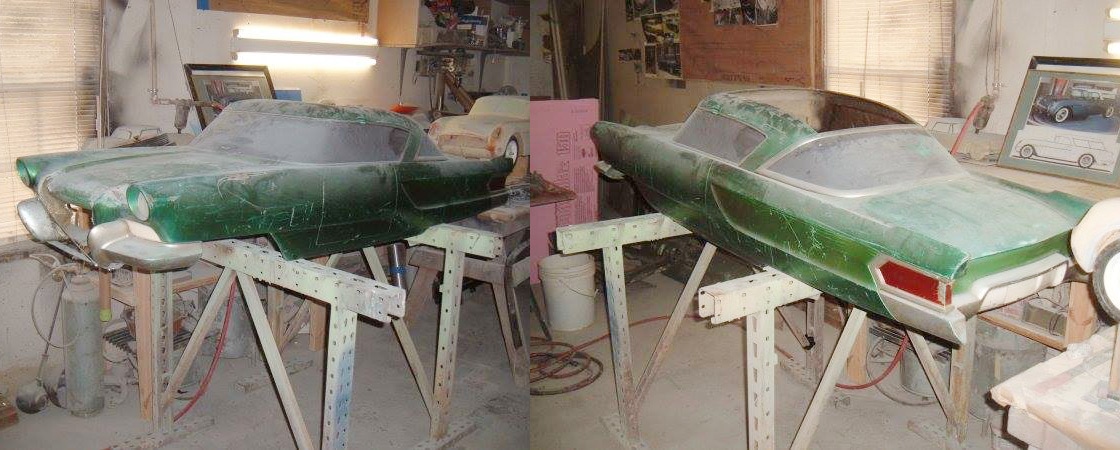
For many automobile stylists and designers, the scale model of their latest design is often the first time their vision results in a tangible product that can be held, examined and refined. The model is then often used to guage interest from other designers, consumers and potential investors in the project. Usually, the model is just a stepping stone to the next iteration for the project. As the final design becomes more and more changed, the original model's typical fate is to become at best an interesting paperweight and at worst cannibalized and discarded in favor of other projects.
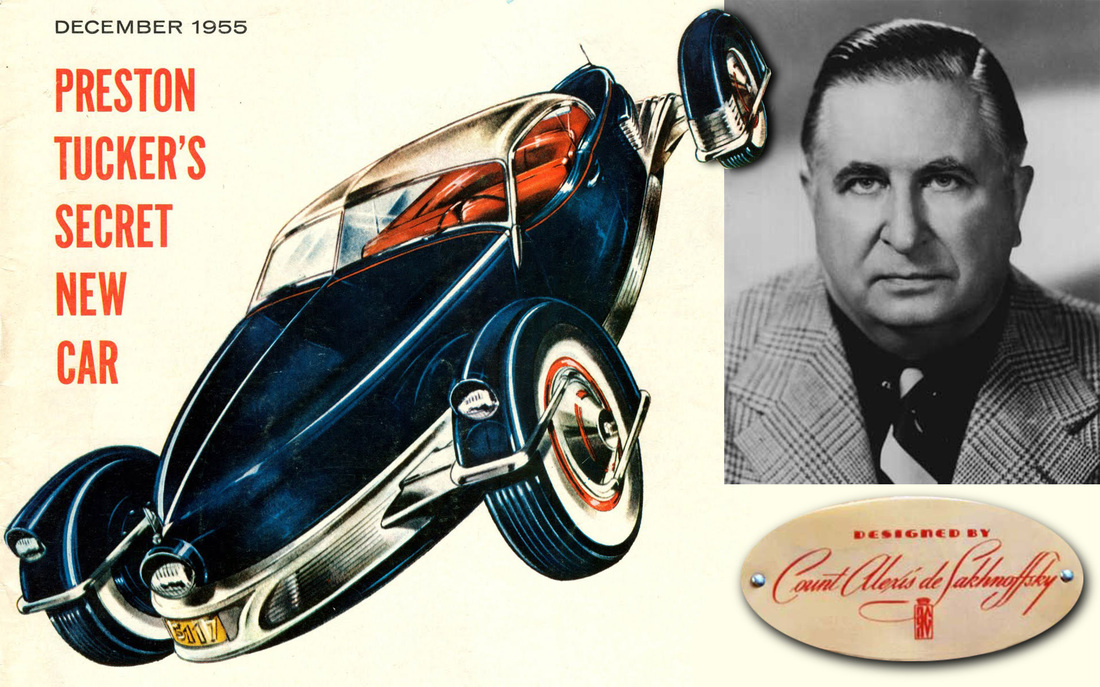
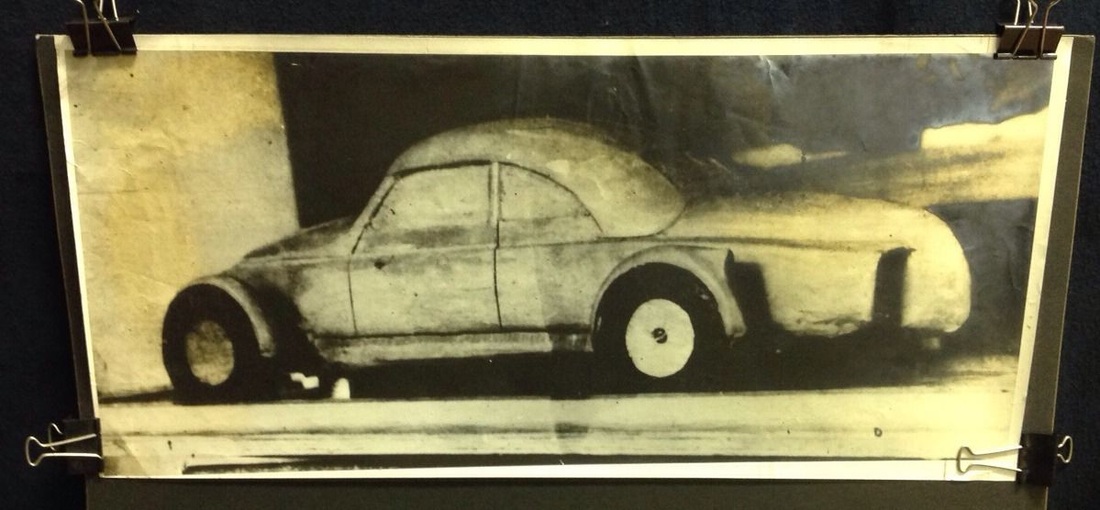
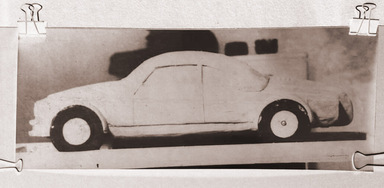
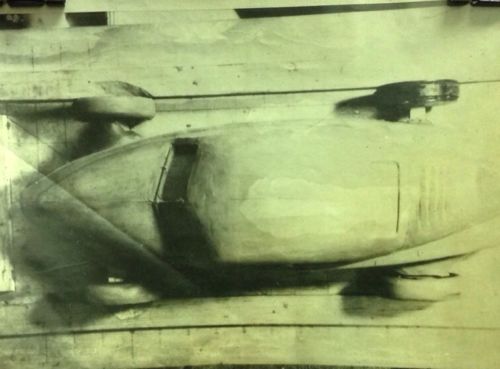
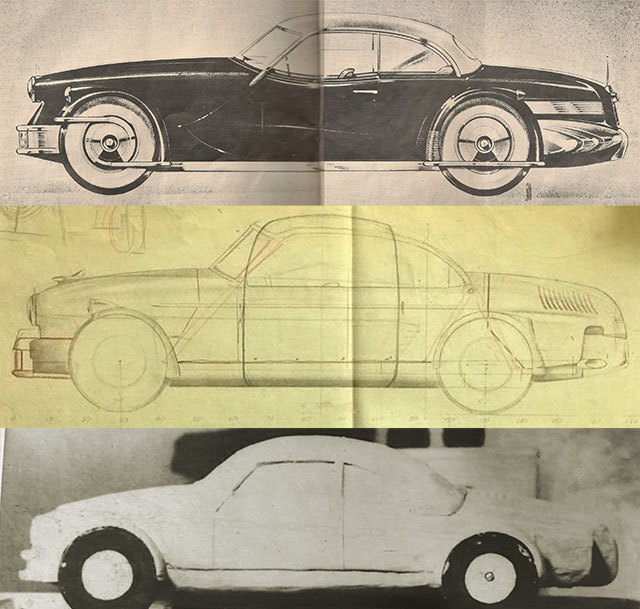
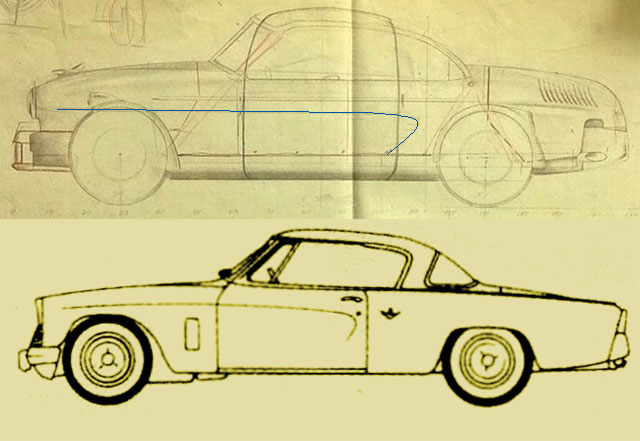
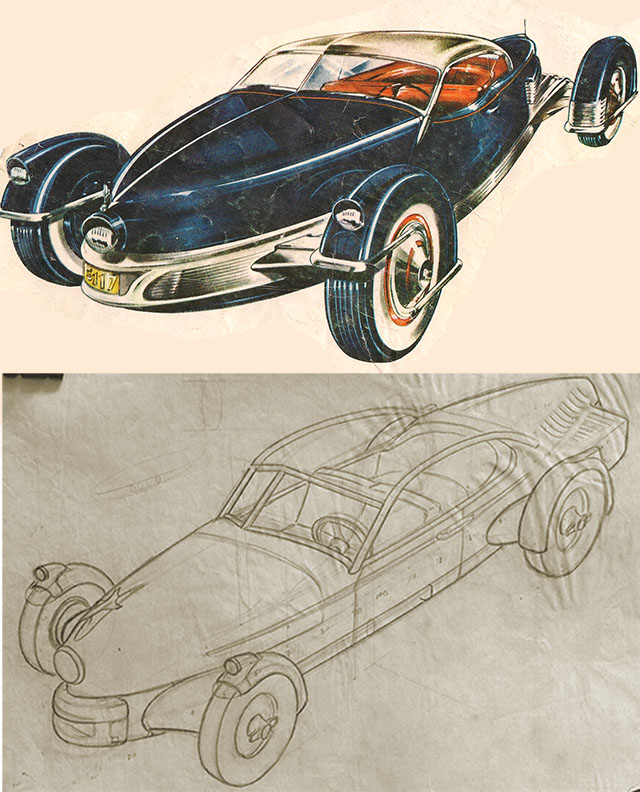
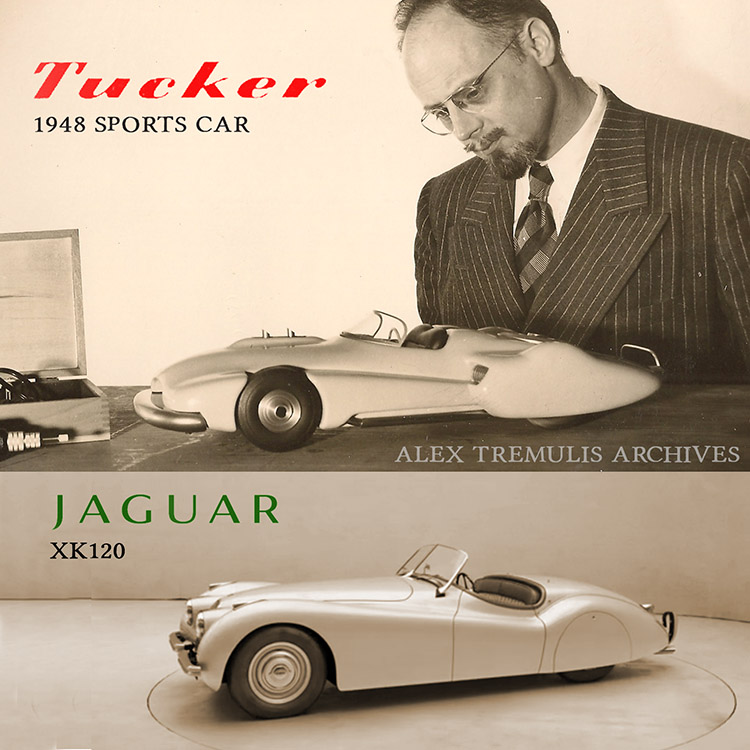
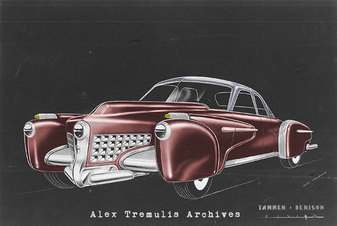
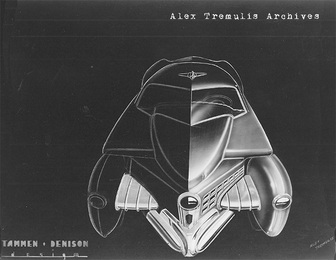
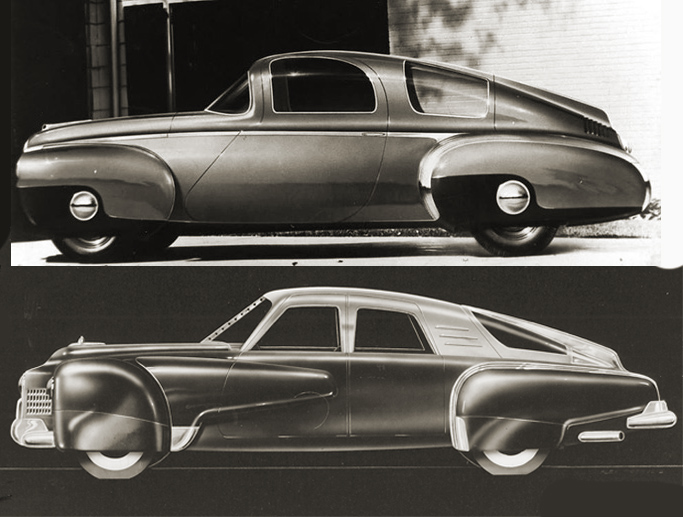
What so unusual about Alex Tremulis' sports car model, is that it served as design inspiration for several notable car companies spanning several years. Starting with Tucker Corporation and ending at Kaiser-Frazer, it took on a life of its own between its corporate duties and almost (or maybe it did) became a reality in the process. The following photographs and articles document the life and times of this well-travelled sports car model that incorporated state-of-the-art concepts in streamlining and aerodynamics.
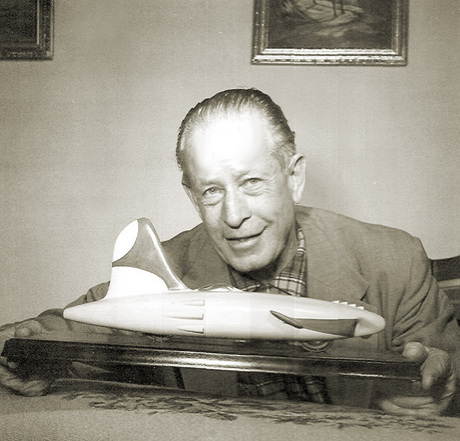
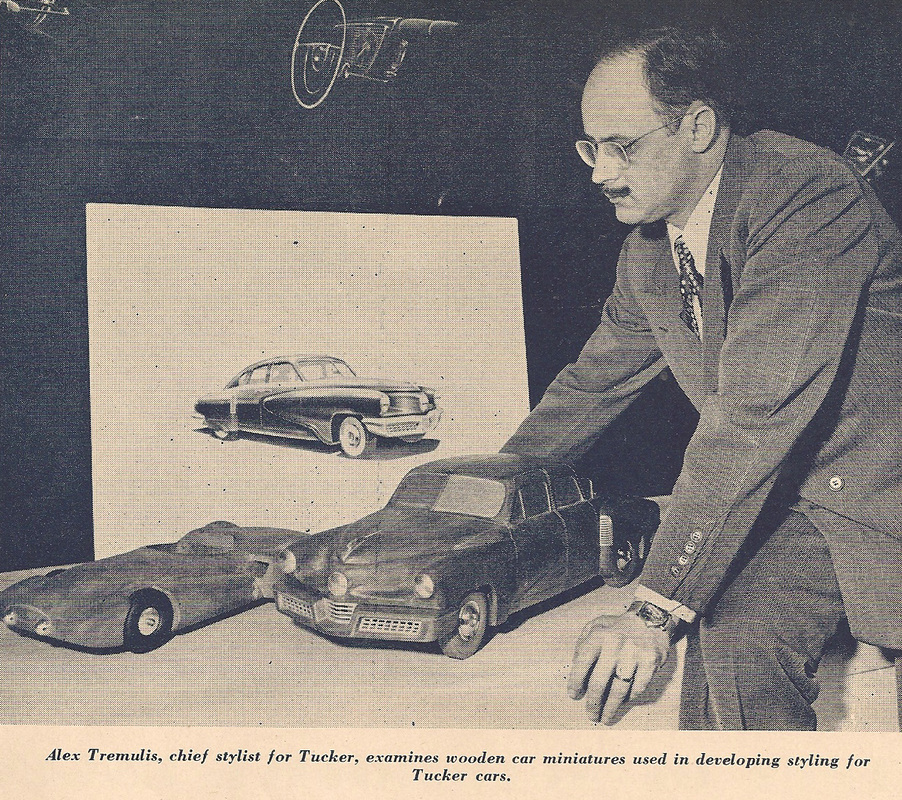
The concept for the sports car started at Tucker. Below, Alex Tremulis and the models of both the production Tucker '48 and the sports car appeared in the May, 1948 Tucker Topics, the dealer periodical distributed by the Tucker Corporation. The model appears to be either still under construction or just prior to getting painted. Cliff Knoble, Advertising Manager, during the same photo shoot by "Chicago Photographers". c.1949: Posed with his model-making tools and the Tucker sports car, Alex Tremulis examines what looks to be the completed and finely detailed scale model. The exposed top of the front wheels in the design was most probably due to comments from Tremulis' long-time friend, Ab Jenkins, who thought you had to see how the tread was wearing on the tires and how the suspension was handling the roadway - especially important for racing. The menacing front view shows proportions that were still far ahead of its time... c.1949: The confident creator of the next American sports car looks ready for all takers in the project.
The photos from this phtoshoot then appear in the April 23, 1949 Sunday Times with a description of the proposed sports car. A guaranteed 125 miles per hour from the car at this point!
Even with the standard production Tucker '48 doomed at this point, Tremulis still stayed on with Tucker until the very end. So this new endeavor for the model was most probably a side venture. It's still unknown if any of the four orders for the car ever materialized, but as time progressed, so did Tremulis' ideas to improve the design. With no Photoshop available, Tremulis took paint and ink directly to the studio photos in order to create the enclosed fenders. Tremulis' pencil lines attempt to redefine the front fenders. The removeable hardtop is painted onto the side view photo and the front fenders are pencilled in. c.1951: The final result with the newly built removeable hardtop and enclosed front fender, including a fresh new paint job. And just that simple, a new model is created. By this time, Alex Tremulis had joined Kaiser-Frazer and he took it upon himself to become the advanced styling studio. By April 1951, exactly three years since its Tucker debut, the freshened-up model makes its first public debut in the Kaiser-Frazer newsletter. April 27, 1951 description within the Kaiser-Frazer newsletter.
Below: October, 1951, Science and Mechanics picked up on K-F's future plans and ran the following photos and description of the model. By now, the car's top speed had increased to over 135mph. c.1951: Alex Tremulis at work in his Kaiser-Frazer office in the Willow Run plant. The Tucker-Tremulis-Neidlinger-Kaiser-Frazer sports car model sits proudly on his credenza. c.1952: With Kaiser-Frazer's future in serious doubt, Tremulis is given free-reign to push the limits of his imagination. As part of his 1952 "Styling Unlimited" speech to the Society of Automotive Engineers (SAE), his car, now a sports-competition design, incorporates air brakes on the rear fender fins and a fighter plane cockpit fairing for improved streamlining. It's presented as one possible future means to actively use aerodynamics for improved performance and handling. It would be at this meeting that Tremulis would also introduce his concept for a gyro-stabilized two-wheeler that eventually would become the Gyronaut X-1 over a decade later. It was also at this meeting where Ford would snatch up Tremulis to help out with their own advanced concepts, a spot Tremulis cherished for the next 11 years. Of course, after designing for so many failed car companies (Cord-Auburn-Duesenberg, American Bantam, Briggs Design, Custom Motors, Crosley, Tucker, and Kaiser-Frazer), when he walked into the Ford plant, his first thought was that here is a company that even he can't bring down. As he put it: "I’ve gone down on more sinking ships than there are ships left." Each of the concepts that this model employed would find their way into many of Ford's Autorama show cars that Tremulis would eventually design. Chrissie Tremulis, Alex's wife, looks over the model on the hood (bonnet) of his highly modified MG. Never one to leave well-enough alone, whether it was his scale models or his (or Chrissie's) personal car, they all were subjected to Alex's design and performance improvements. With his MG, he tried to stay competitive with several of his fellow coworkers in amateur competitions. But that's another story... Keep up-to-date by "LIKE"ing the Gyronaut X-1 Facebbok Page for immediate update notifications and the latest information...
c. 1965, this lakester, made from a surplus World War II belly tank, caught the eye of Alex Tremulis. At the time, most bellytanks remained true to their original form with only some modification to enable a driver to get in and out and usually some openings for exhausts. Not this one, however, with its squared-off top half and specially formed engine cover. It's unique shape surely was a topic of aerodynamic discussion which prompted Tremulis to take a full complement of photos from each angle. Not only looking fast standing still, this little racer evidently stood up to its critics with a top speed in the vicinity of 300 miles per hour, apparently urged on with the help of a supercharged Chrysler engine, and driven by Howard Johnson. Fast forward 40 years or so and Mel Hoy's lakester shows up at a swap meet in Portland, Oregon, where it was photographed by land speed racer Mike Kelly. It looks to be in amazingly good condition with most of its unique bodywork appearing intact and unblemished. These newest photos and the latest updates on Mel Hoy's creation can be found on the landracing.com website HERE. Let's hope that this little lakester with a speedy past gets the restoration it deserves and maybe someday it will make a public re-appearance for all to enjoy...
|